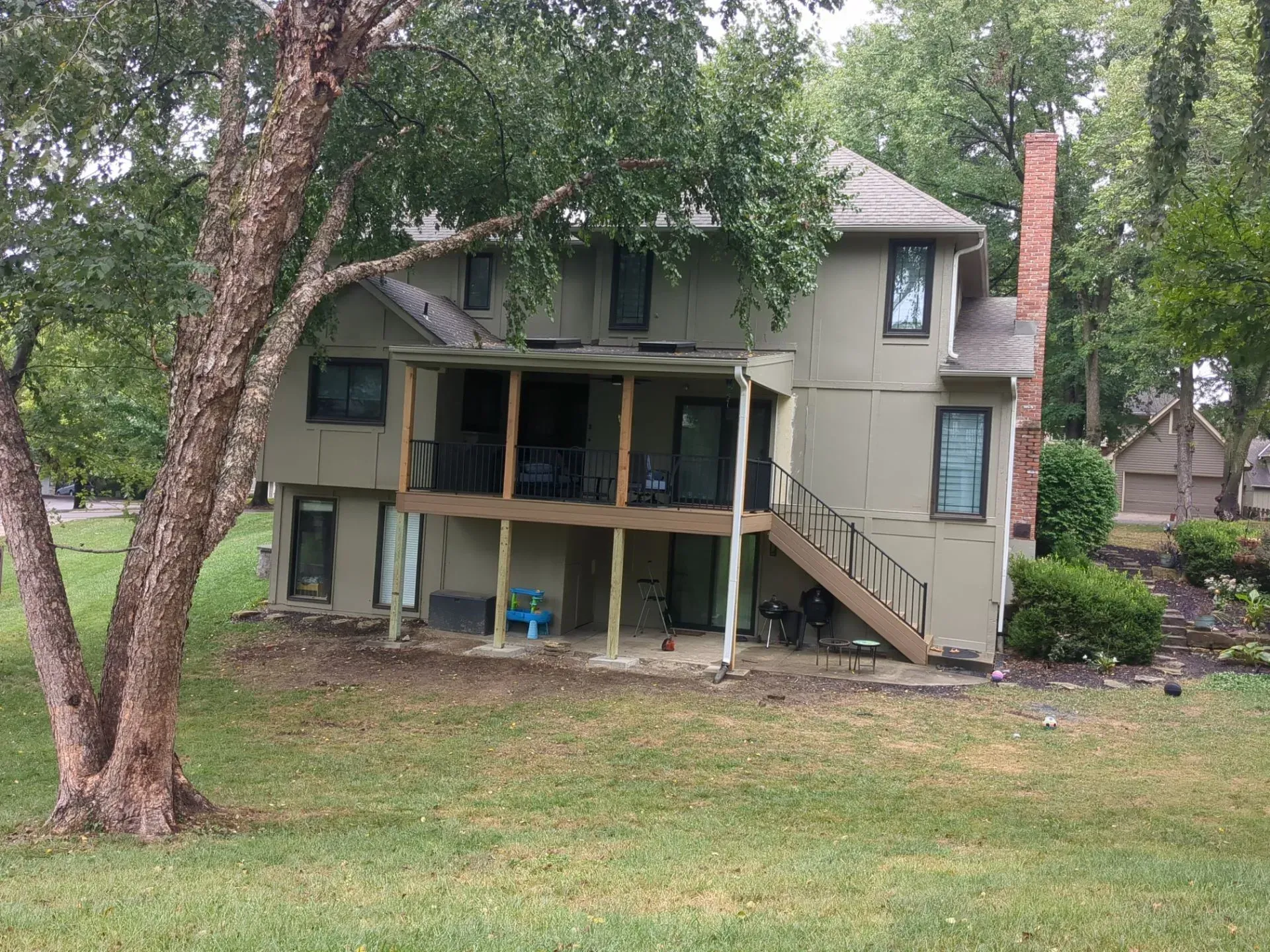
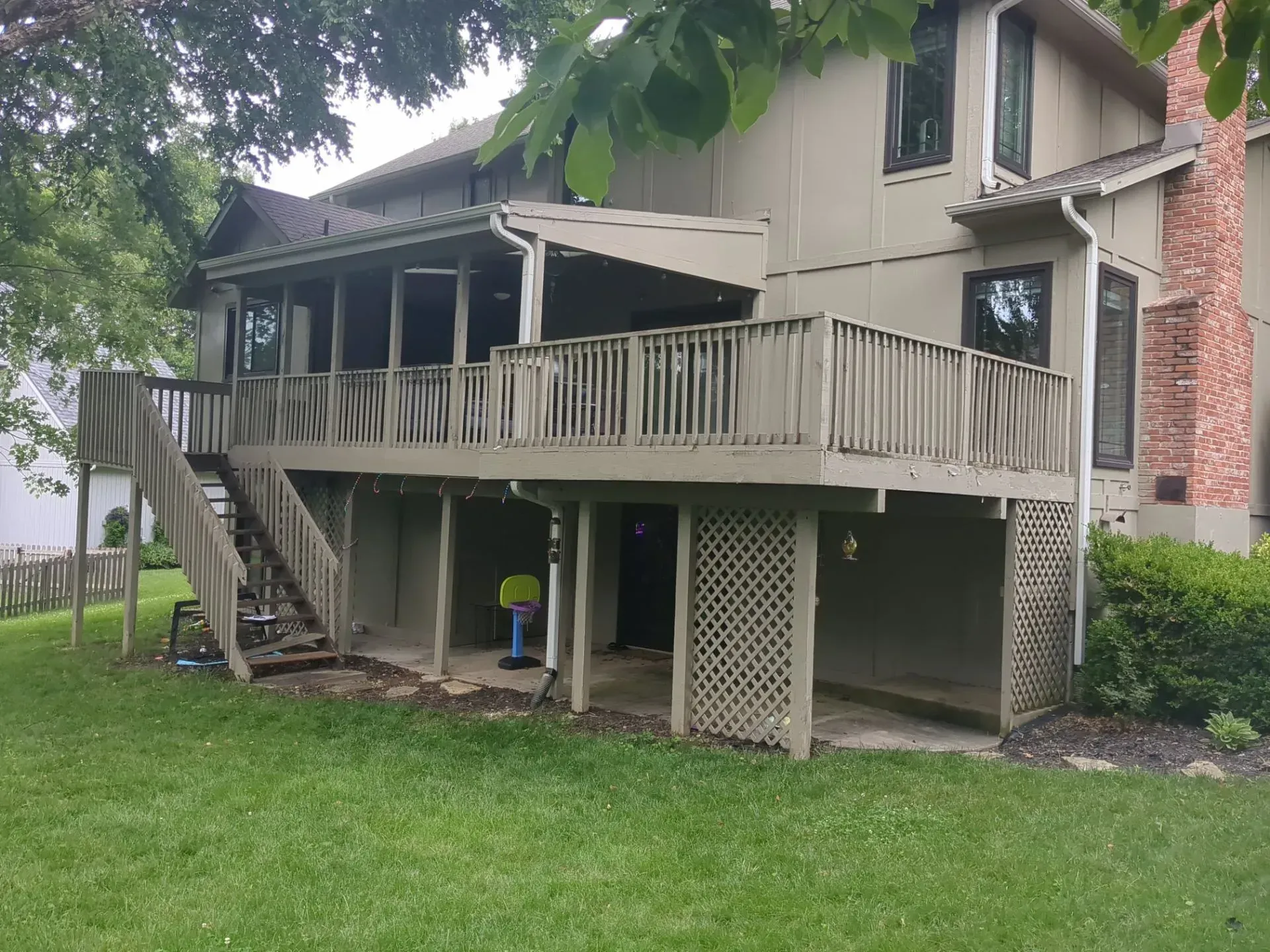
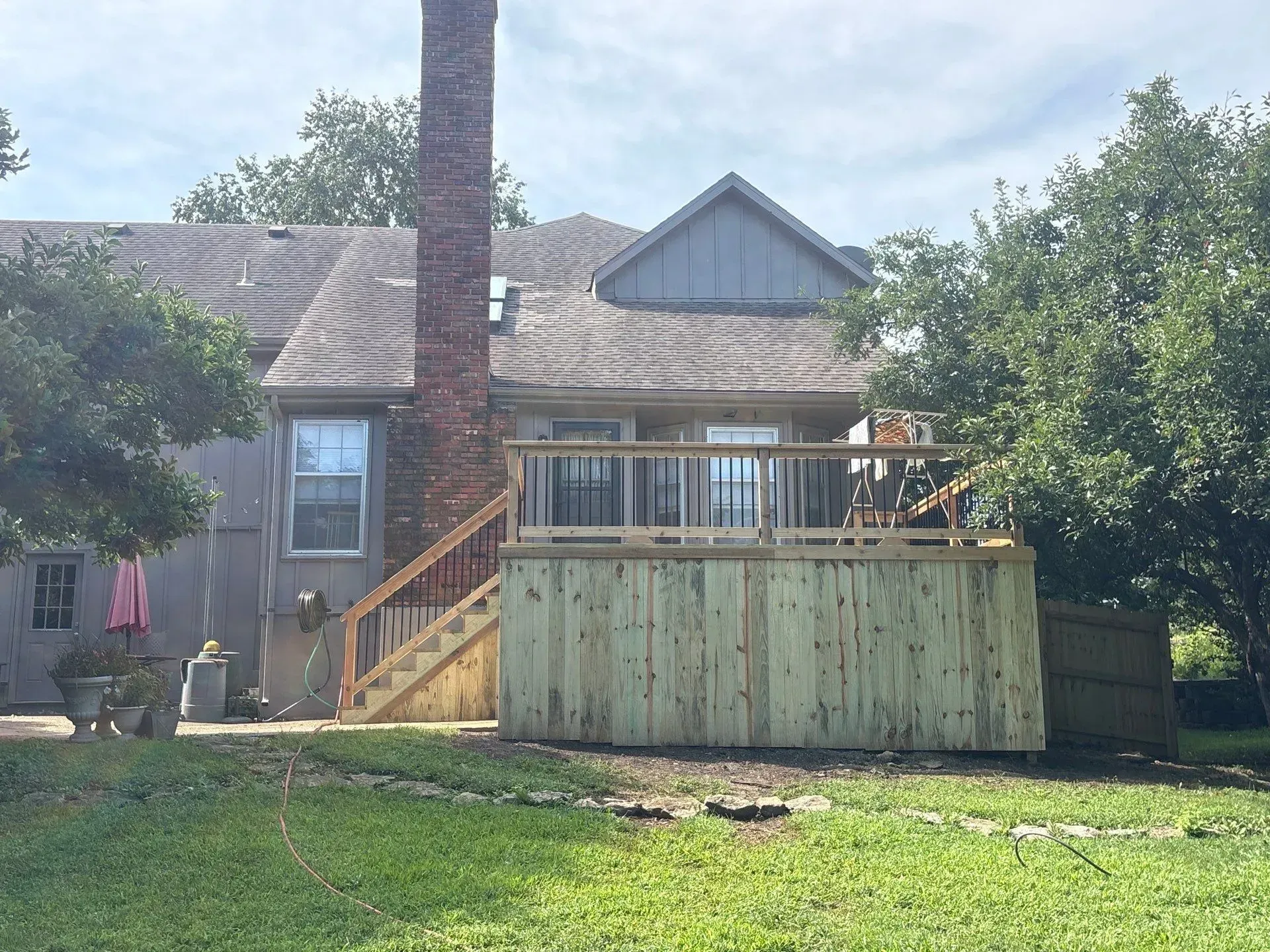
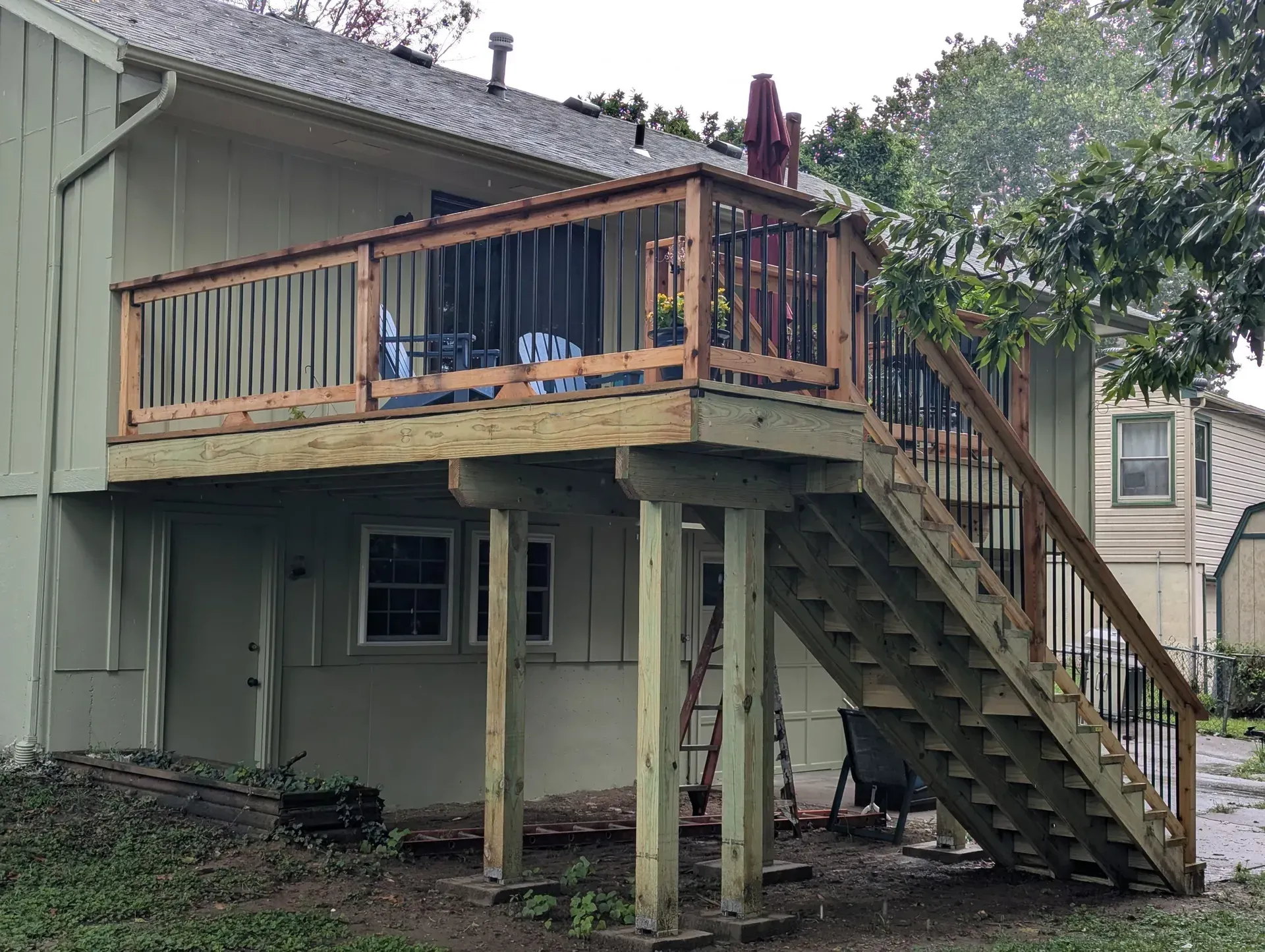
The existing structure was a full wood build, top to bottom: wood decking, wood stair stringers, wood railings, and lattice skirting underneath to hide the storage area below. It had held up reasonably well, but the finish was faded and inconsistent, the stairs were showing their age, and — as is common with older wood decks in this climate — the ledger connection at the house had allowed some moisture to work its way into the siding over the years.
Before any new lumber went up, the entire deck and stair system came down to the framing, giving our crew a clear look at the ledger board, the rim joist, and the siding behind it — and confirming exactly what needed to be repaired before rebuilding.
Repairing the Siding
Once the old deck was clear, we found and repaired the damaged siding sections where the previous ledger attachment had allowed water intrusion. Rather than patch over a problem, we replaced the compromised board-and-batten siding, sealed the new ledger flashing properly, and made sure the house was watertight before a single deck board went back on. This step gets skipped more often than it should — but it's the difference between a deck that lasts and a deck that causes the same problem again in five years.
Building the New Deck and Stairs
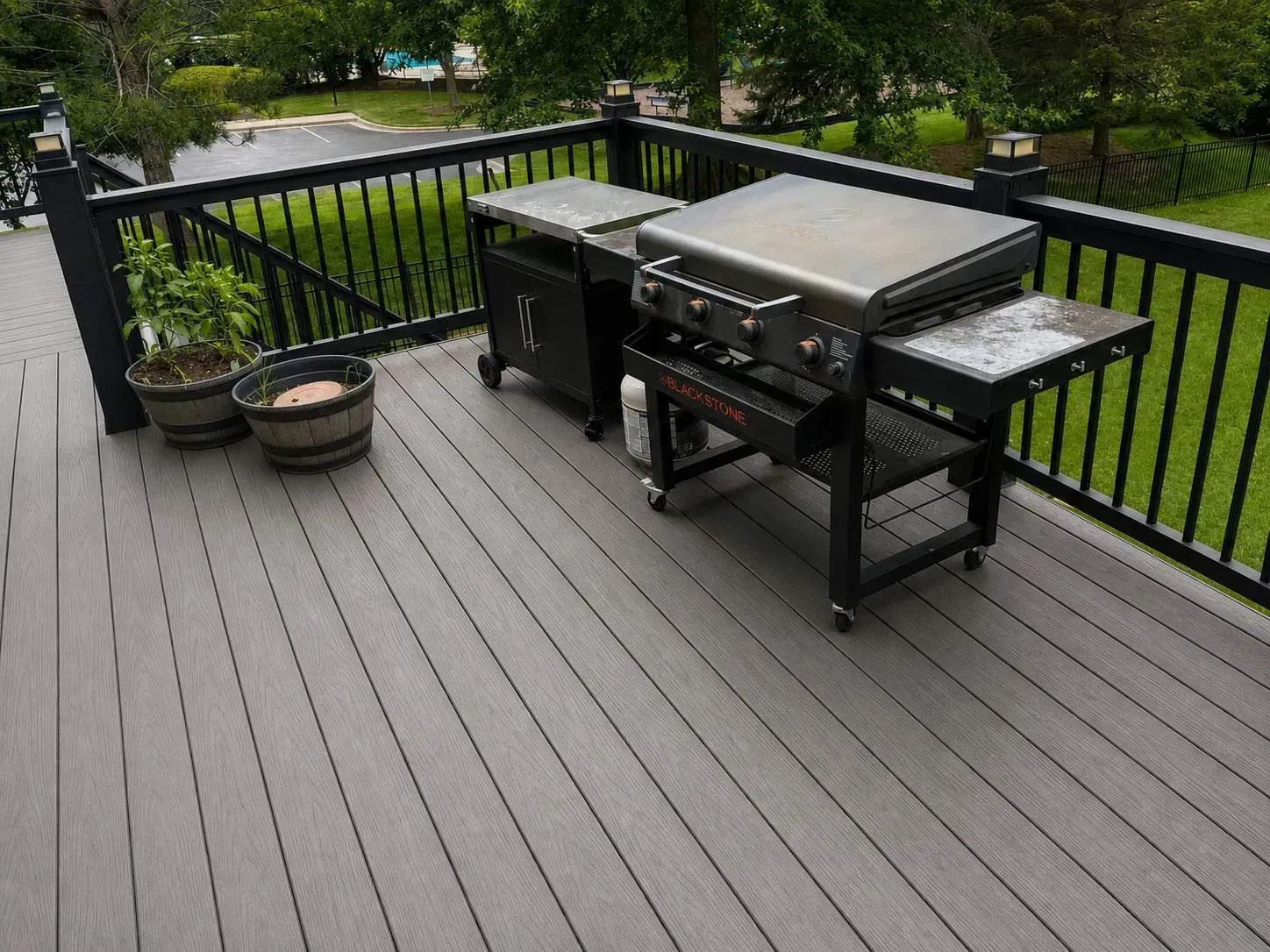
With the structure solid and the
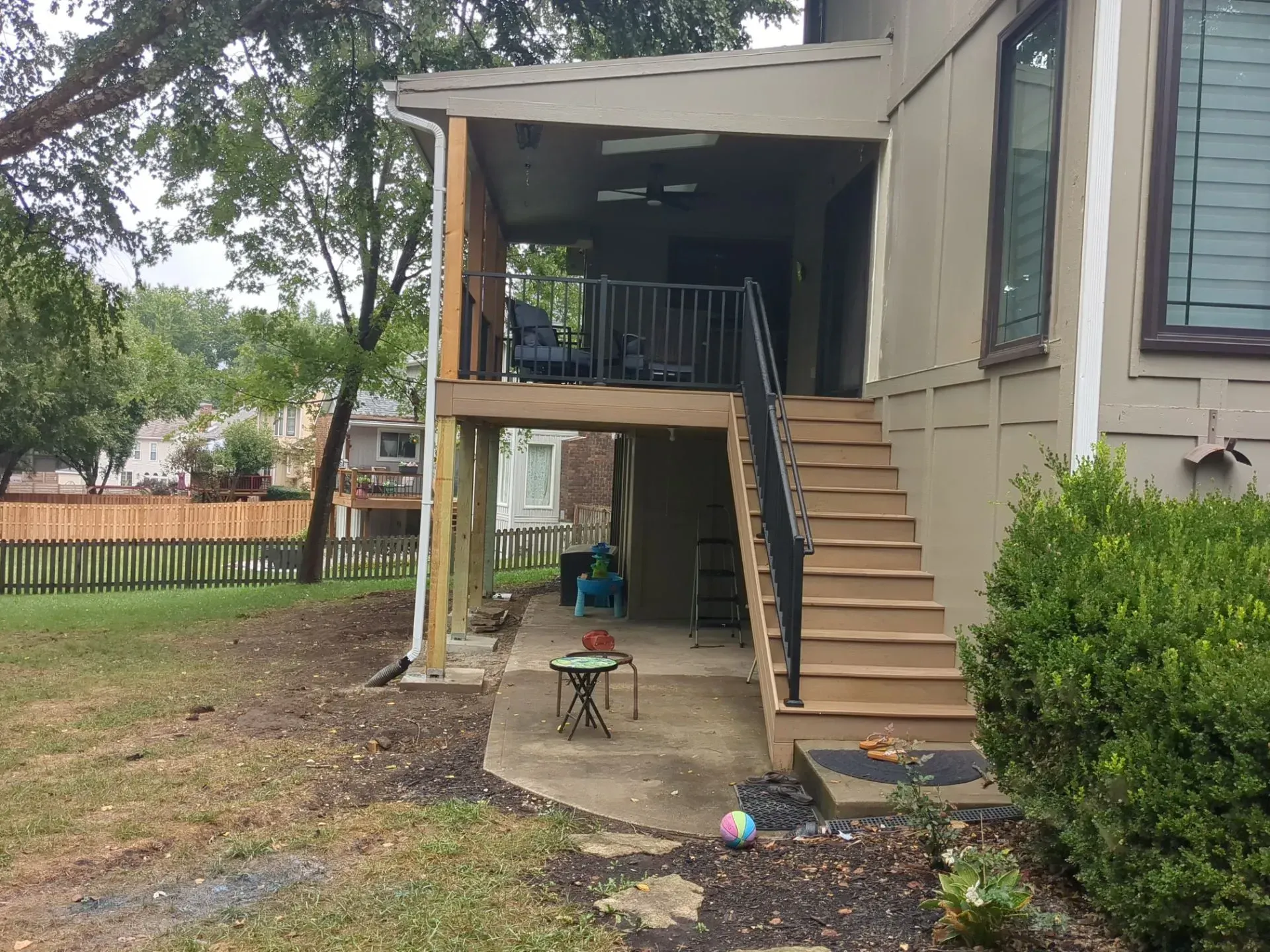
siding repaired, we framed and installed a brand-new deck using low-maintenance composite decking, paired with a sleek black aluminum railing system that gives the whole back of the house a more modern, finished look.
The new stair stringers and treads were rebuilt to match the composite decking above, with the same black metal railing carried down the full run of stairs for a clean, continuous look from the upper deck all the way to the patio below. The open area underneath the deck was left accessible for the storage and grill space the homeowners rely on, but now sits under a structurally sound, properly flashed deck instead of one with a moisture problem hiding behind the walls.
The Result
The homeowners went from a tired, high-maintenance wood deck with a hidden siding issue to a composite deck and stair system that won't need staining, won't rot, and is backed by siding that's been properly repaired and sealed. It's a bigger job than a simple deck resurfacing, but it's the right one when the problem goes deeper than the surface.
Signs Your Deck Might Need More Than a Facelift
If you're noticing any of the following, it may be time for a full evaluation rather than a quick repair:
- Soft, spongy, or discolored decking near where the deck meets the house
- Peeling paint or visible damage on siding directly behind or above the deck
- Stairs that feel less solid than they used to
- A railing system that's loose, splintering, or no longer up to current code
- A deck that's more than 15–20 years old and has never had the ledger board inspected
Ready for a deck that's actually built to last? Top Tier Exteriors handles everything from framing and ledger repair to composite decking, custom railing, and stair rebuilds across the Kansas City metro.
Contact us for a free on-site evaluation.