


Composite vs. Wood Decking: Which Is Right for Your Kansas City Property?
Short answer: wood costs less upfront and offers a natural appearance, but needs staining and sealing every one to three years. Composite costs more initially but requires minimal maintenance and holds up consistently through Kansas City's humid summers and freeze-thaw winters. The right choice depends on your budget, how much upkeep you're willing to do, and how long you plan to stay in the home.
Composite vs. Wood at a Glance
Material is typically one of the largest drivers of total project cost. Here's roughly how the main options compare to each other:
| Factor | Wood | Composite |
|---|---|---|
| Upfront cost | Lower | Higher |
| Ongoing maintenance | Staining/sealing every 1-3 years | Minimal — occasional cleaning |
| Expected lifespan | 15-20 years with maintenance | 25-30+ years |
| Appearance | Natural wood grain, can be stained different colors | Consistent wood-look grain and color, doesn't change over time |
| Surface feel | Can splinter as it ages | Won't splinter |
| Repair | Individual boards easy to replace, widely available | Board replacement depends on matching manufacturer color/product line |
| Performance in KC weather | Needs consistent sealing to resist humidity and UV | Handles humidity and freeze-thaw with minimal upkeep |
Cost Over Time, Not Just Upfront
Wood decking costs less to install than composite, but that gap narrows — and can sometimes close — once you factor in the cost of staining and sealing every one to three years over a 15-to-20-year deck lifespan, particularly if you're paying a professional rather than doing it yourself.
Composite's higher upfront cost reflects the fact that there's little to no recurring maintenance cost after installation. Whether that tradeoff is worth it depends on how long you plan to stay in the home and how much you value not having a recurring task on your calendar.
Maintenance Comparison
Wood Deck Maintenance
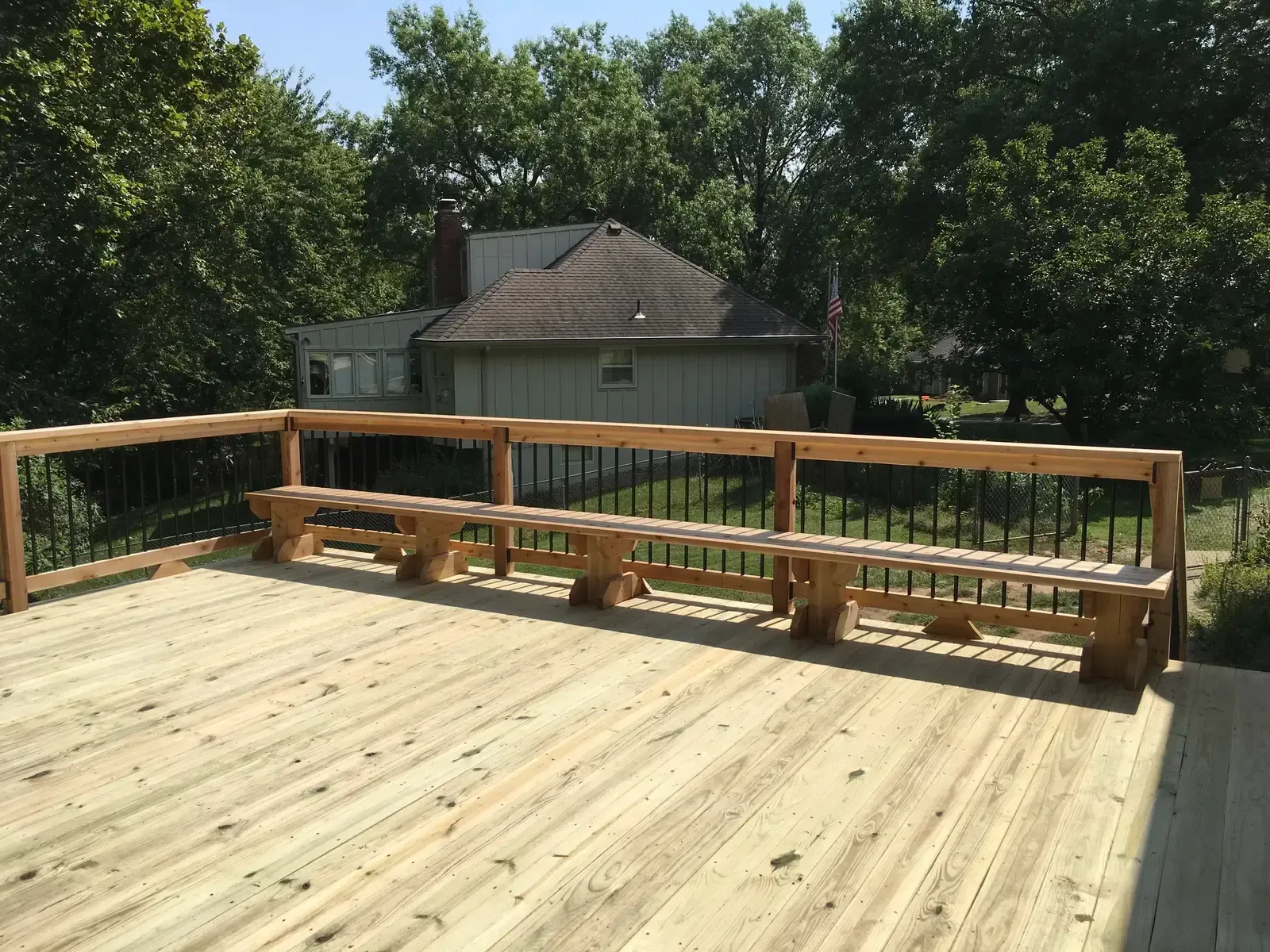
Wood decking needs to be restained or resealed roughly every one to three years, depending on sun exposure and the quality of the original finish. Skipping this maintenance leads to graying, splintering, and eventually rot in the boards.
Composite Deck Maintenance
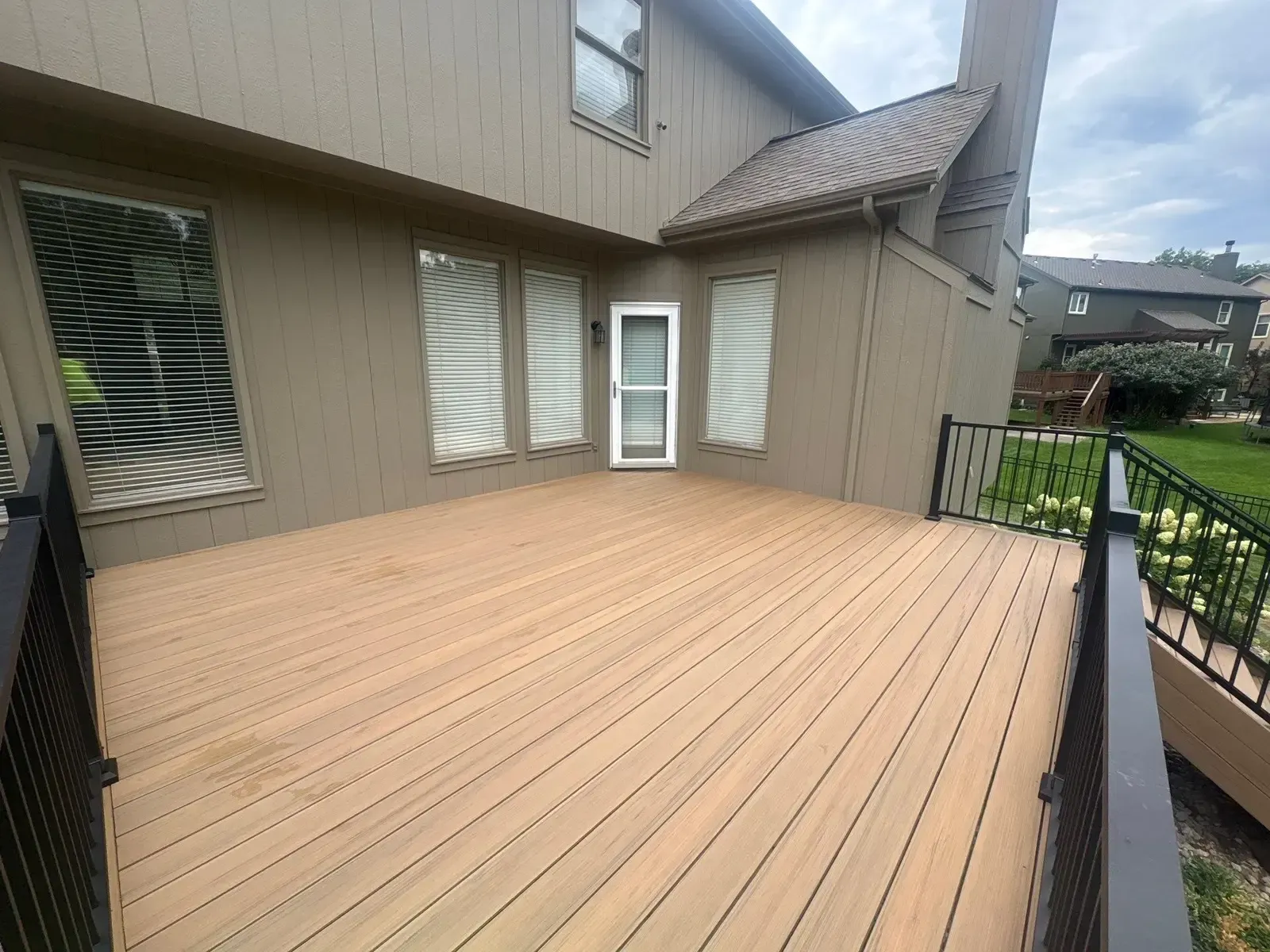
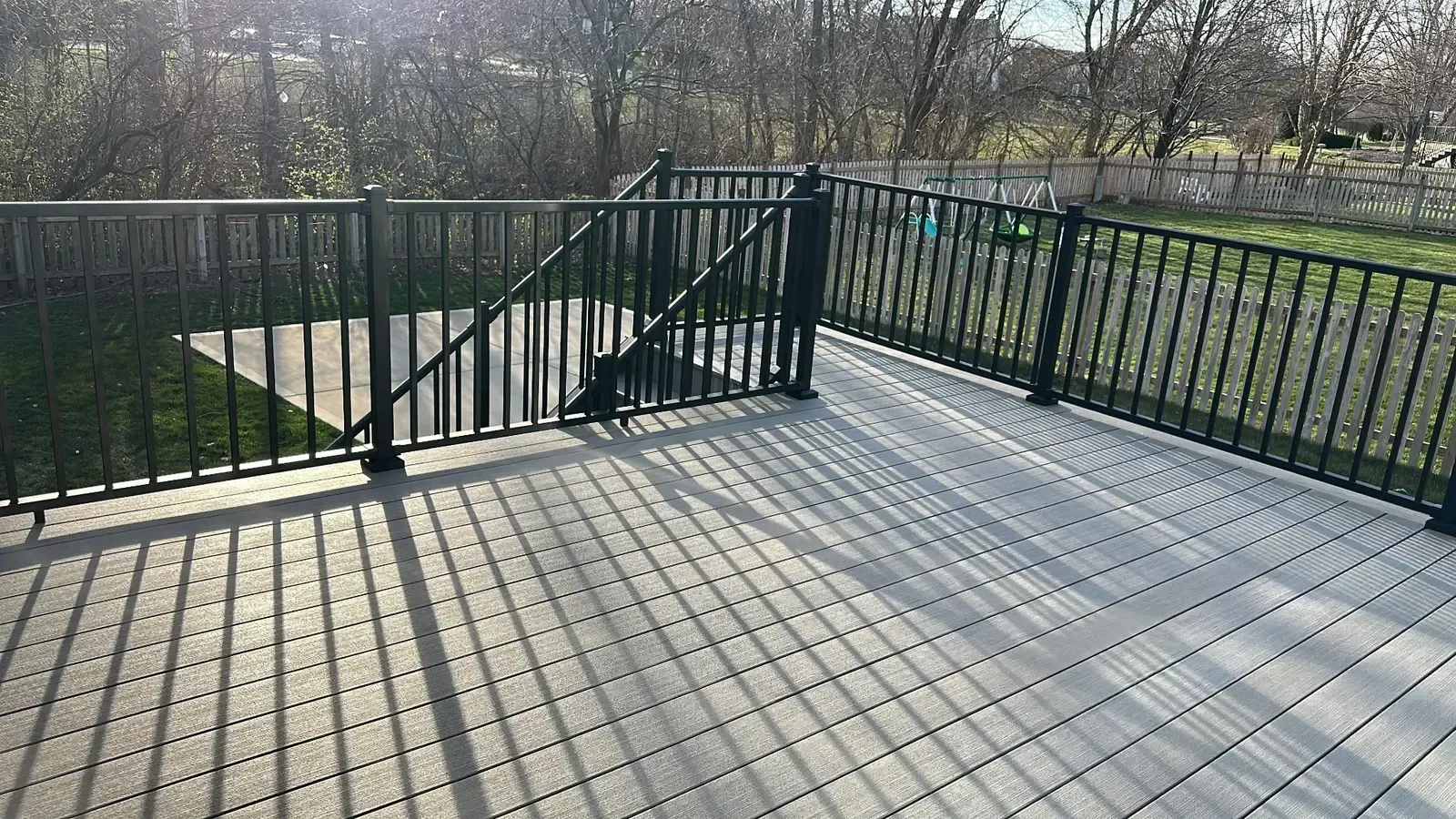
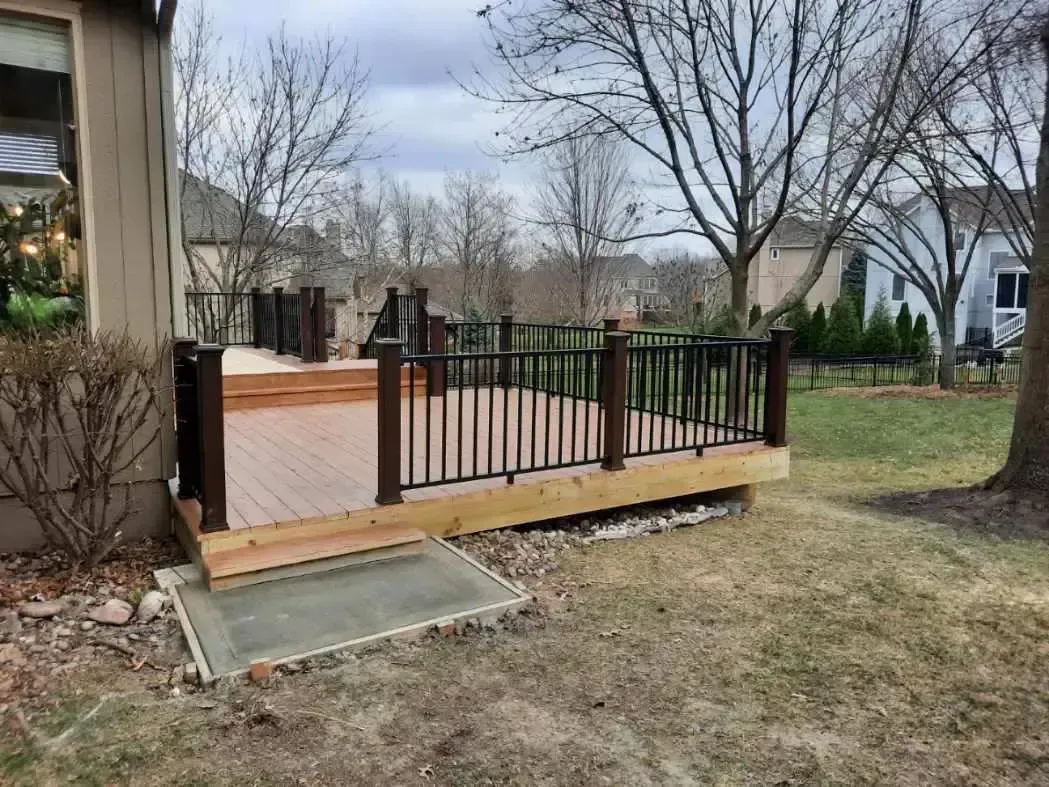
Composite decking doesn't need staining or sealing. Routine cleaning to remove dirt, leaves, and surface debris is typically all that's required to keep it looking consistent year to year.
Durability and Lifespan
Wood Deck Durability
A well-maintained wood deck can last 15 to 20 years. Lifespan depends heavily on how consistently it's stained and sealed, along with the specific wood species used — a neglected wood deck can show serious wear in far less time.
Composite Deck Durability
Composite decking commonly lasts 25 to 30 years or longer, since it resists the rot, splintering, and moisture absorption that affect wood over time. Quality varies by manufacturer and product line, so warranty terms are worth comparing directly.
Appearance and Feel
Wood Deck Durability
Wood offers a genuine, natural grain that composite is designed to replicate but doesn't fully duplicate — some homeowners prefer the authentic look and the ability to restain wood a different color later if their preferences change. Composite offers a consistent wood-look appearance and color that doesn't change over time without any staining, and modern composite products have narrowed the visual gap with real wood considerably compared to older composite generations.
Underfoot, composite doesn't develop the splinters that aging wood can, which matters for households with bare feet, kids, or pets using the deck often.
Composite vs. Wood in Kansas City Conditions
Humidity and Moisture
Kansas City's humid summers and heavy spring rainfall put real demand on a wood deck's finish — without consistent sealing, wood boards can swell, cup, or trap moisture that leads to rot. Composite resists this kind of moisture absorption with little to no maintenance required.
Freeze-Thaw and Footing Requirements
Both materials sit on the same underlying frame and footings, which need to account for Kansas City's clay-heavy soil and freeze-thaw cycles regardless of decking material. The choice between composite and wood doesn't change the structural planning underneath — only the surface material and its maintenance needs.
UV Exposure
Kansas City's strong summer sun fades and dries out unsealed wood faster than in milder climates, which is part of why a consistent staining schedule matters more here than in some other regions. Composite generally holds its color better under UV exposure, though lower-quality products can fade over many years regardless of climate.
Which Material Is Right for You
Choose wood if you want a lower upfront cost, a natural appearance, and don't mind a recurring staining and sealing schedule — or if you like the option to change the color later.
Choose composite if you want to minimize ongoing maintenance, are planning to stay in the home long-term, and are comfortable with a higher upfront cost in exchange for lower total effort over the life of the deck.
Neither option is objectively better — the right choice depends on your priorities, not ours.
Frequently Asked Questions About Composite vs. Wood Decking
Is composite decking worth the extra cost over wood?
It depends on how long you plan to stay in the home and how much you value avoiding maintenance. If you're staying long-term and want to minimize upkeep, composite's higher upfront cost often pays off over time. If you're budget-conscious now or don't mind maintenance, wood is a reasonable choice.
Does composite decking get hot in the sun?
Composite can get warmer than wood in direct summer sun, particularly darker colors. Lighter color options and shaded areas can help reduce surface heat.
Can wood decking be stained a different color later?
Yes. One advantage of wood is that it can be restained a different color during a future maintenance cycle, which composite generally cannot.
Which material is better for a deck near a pool or hot tub?
Composite generally handles consistent moisture exposure better than wood, given its resistance to swelling and rot, which can make it a practical choice near a pool or hot tub area.
Does composite decking scratch or show wear?
Composite can scratch, particularly from dragging furniture, though it doesn't splinter or rot the way wood can. Wear patterns differ between the two materials rather than one being universally more resistant.
Do you install both composite and wood decking?
Yes. We install both materials and can help you compare options based on your specific property and priorities during a free estimate.
Ready to Compare Composite and Wood for Your Property?
Our team can walk your property, discuss your priorities, and help you decide between composite and wood based on your actual budget and goals.