


How Much Does a Deck Cost in Kansas City?
Deck pricing varies widely based on material, size, elevation, and project scope. This guide breaks down the factors that actually drive cost, so you know what to expect before requesting an estimate.
Why Deck Pricing Isn't a Simple Price-Per-Square-Foot Number
Many homeowners start their search looking for a flat price-per-square-foot figure, but deck cost depends on enough property-specific variables that a generic number is often misleading. Two decks of the same size and material can cost meaningfully different amounts depending on elevation, footing conditions, and features like stairs and railings.
This guide walks through what actually moves the price, so you can understand your own project's cost drivers before you request a quote.
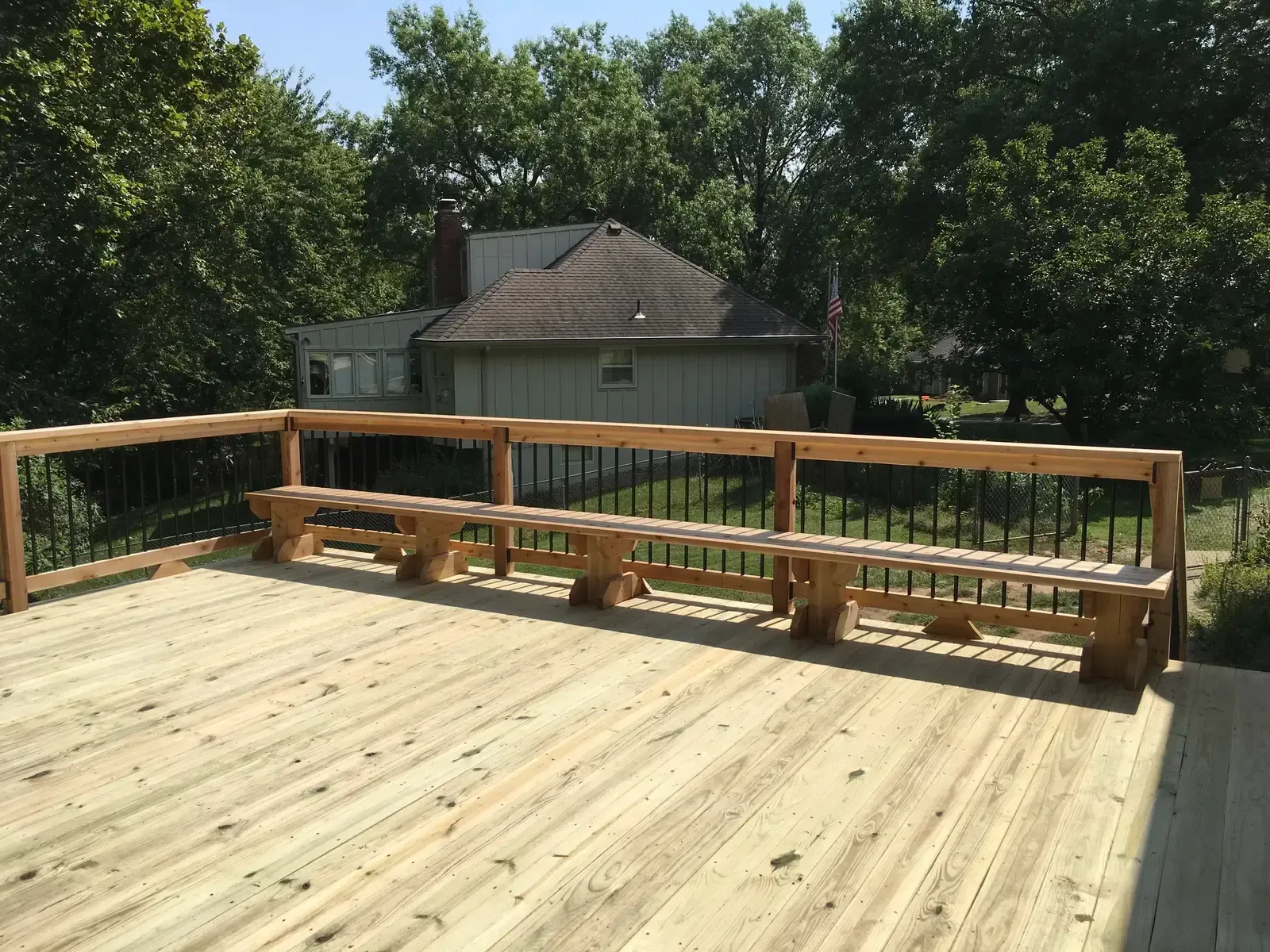
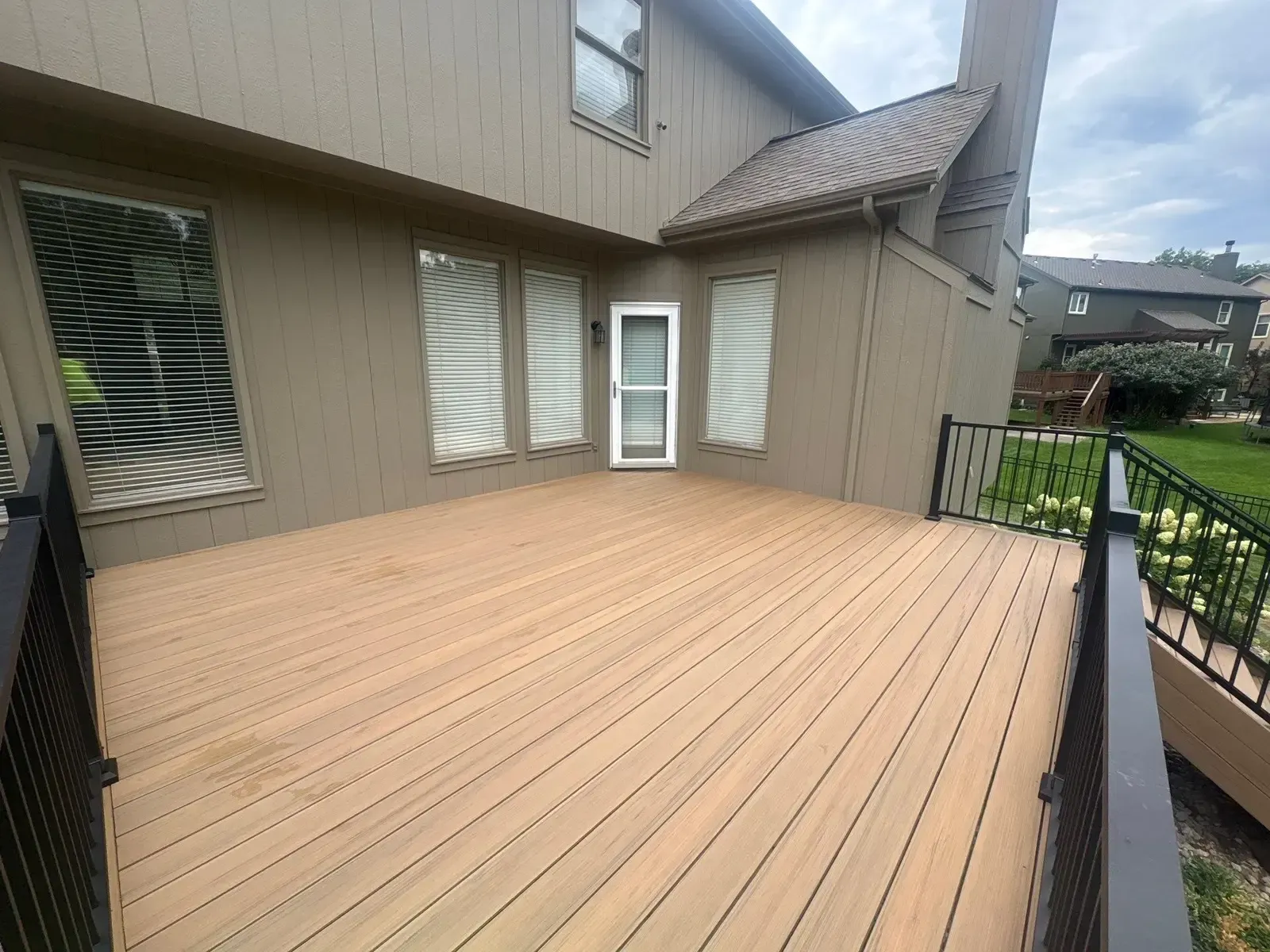
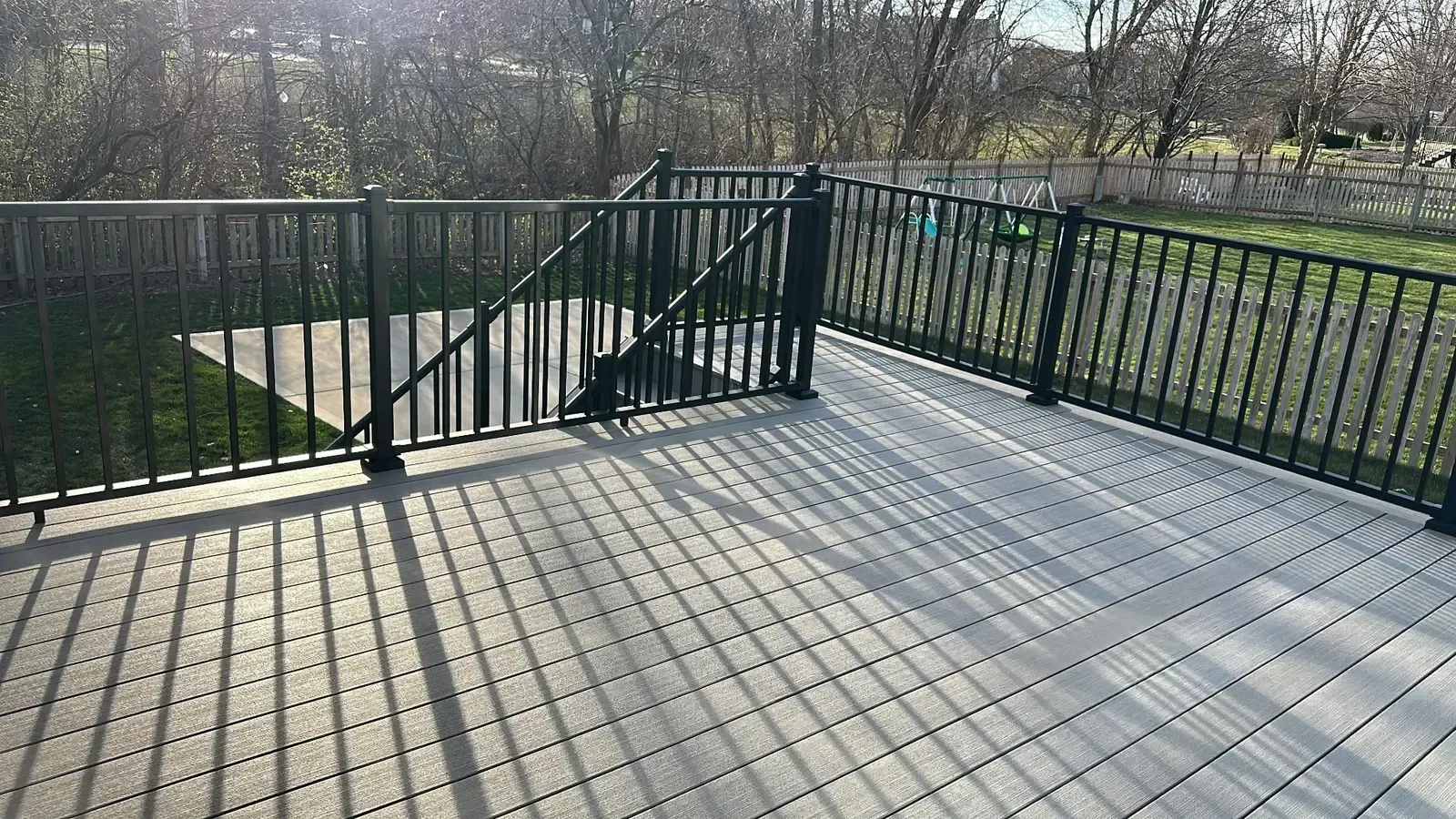
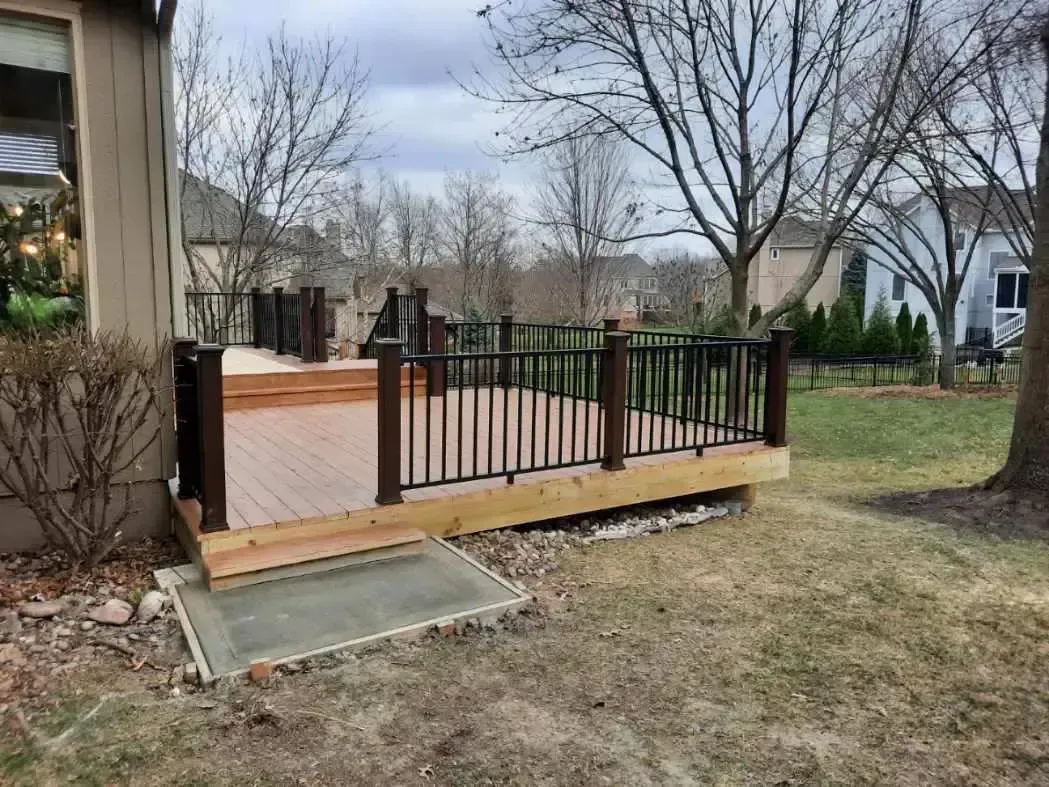
Deck Material
Material is typically one of the largest drivers of total project cost. Here's roughly how the main options compare to each other:
| Material | Relative Cost | Typical Maintenance |
|---|---|---|
| Pressure-treated pine | Lowest | Highest (staining/sealing every 1-3 years) |
| Cedar | Low-moderate | Highest (staining/sealing) |
| Composite | Moderate-higher | Minimal |
| Premium/capped composite | Highest | Minimal |
Composite Decking
Composite decking generally costs more upfront than wood, reflecting its lower long-term maintenance. Learn more about composite decking options and what drives its specific pricing.
Wood Decking
Wood decking typically costs less upfront than composite, with the tradeoff of ongoing staining and sealing over the life of the deck. Learn more about wood decking options and species pricing differences.
Deck Size
Overall project cost scales with total square footage, but larger decks often come with a lower effective cost per square foot than small ones — mobilization, equipment setup, and footing work represent a relatively fixed cost regardless of a project's total size, so that cost is spread across more square footage on a larger deck.
Deck Elevation and Layout
Ground-level decks generally cost less than raised or multi-level decks, since elevated structures require taller support posts, deeper footings, and additional bracing that a ground-level design doesn't need. Here's roughly how the main layout types compare:
| Deck Type | Relative Cost | Why |
|---|---|---|
| Ground-level | Lowest | Minimal footing depth, no tall posts or extended framing |
| Raised | Moderate-higher | Taller posts, deeper footings, more bracing, stairs required |
| Multi-level | Highest | Each level needs its own footings, framing, and often its own stair connection |
Stairs, Railings, and Additional Features
Stairs and railings add cost beyond the core deck surface, and the amount depends on total linear footage, material, and design complexity. A covered deck or pergola adds further cost for the additional structure and roofing or lattice work involved.
| Feature | Adds Cost For |
|---|---|
| Stairs | Framing, treads, railing, landing |
| Railings | Material, linear footage, baluster style |
| Covered deck | Roof structure, support posts, roofing material |
| Pergola | Framing, lattice work, posts |
Site Access and Footing Conditions
Decks on properties with easy equipment access typically cost less to build than those requiring materials to be hand-carried through gates or around structures. Difficult digging conditions for footings, whether from rocky subsurface or dense clay, can also add time and cost.
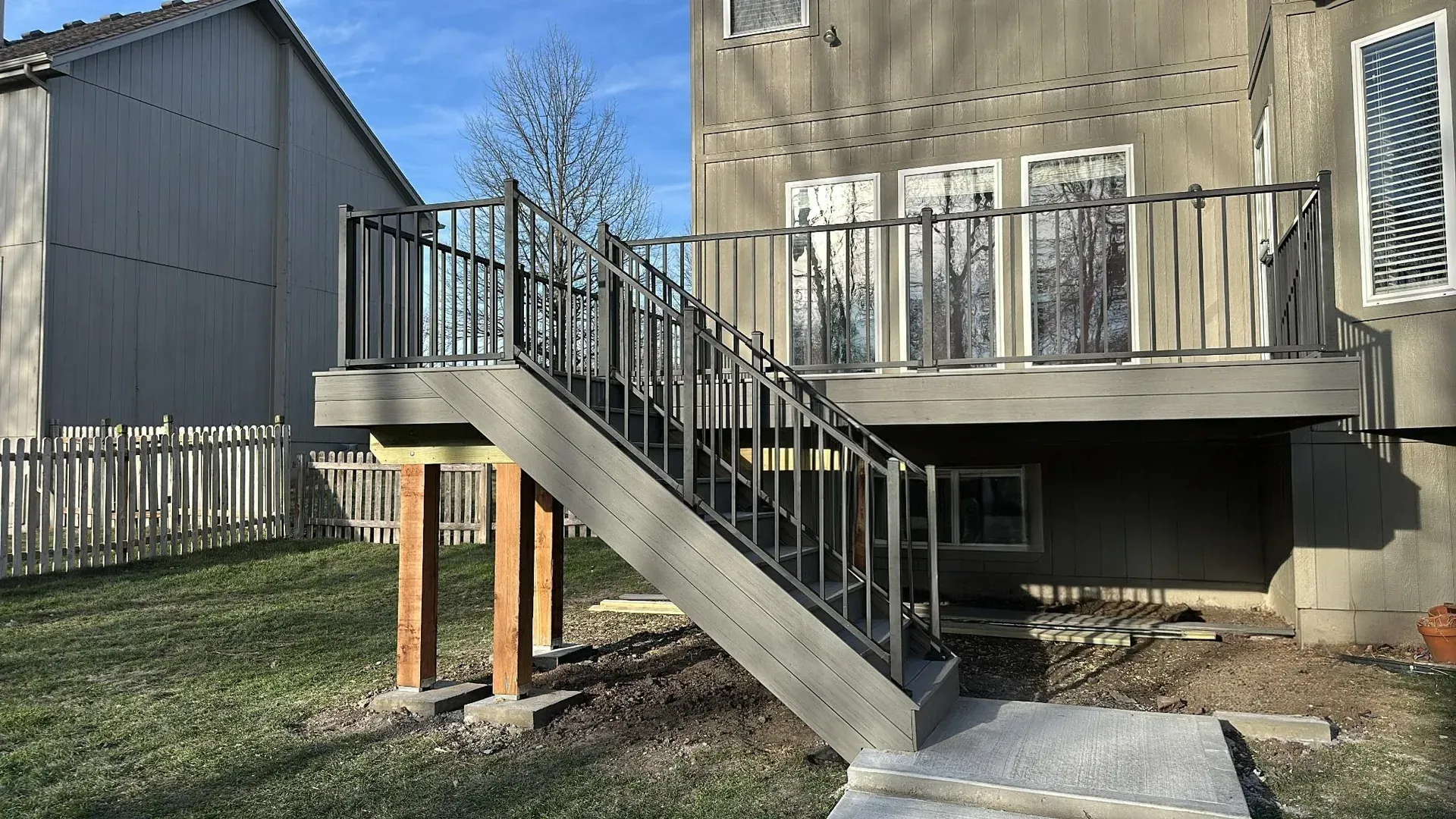
Replacing an Existing Deck
Deck replacement adds removal and disposal cost on top of new construction. The condition and construction of the old deck affects how much labor removal requires.
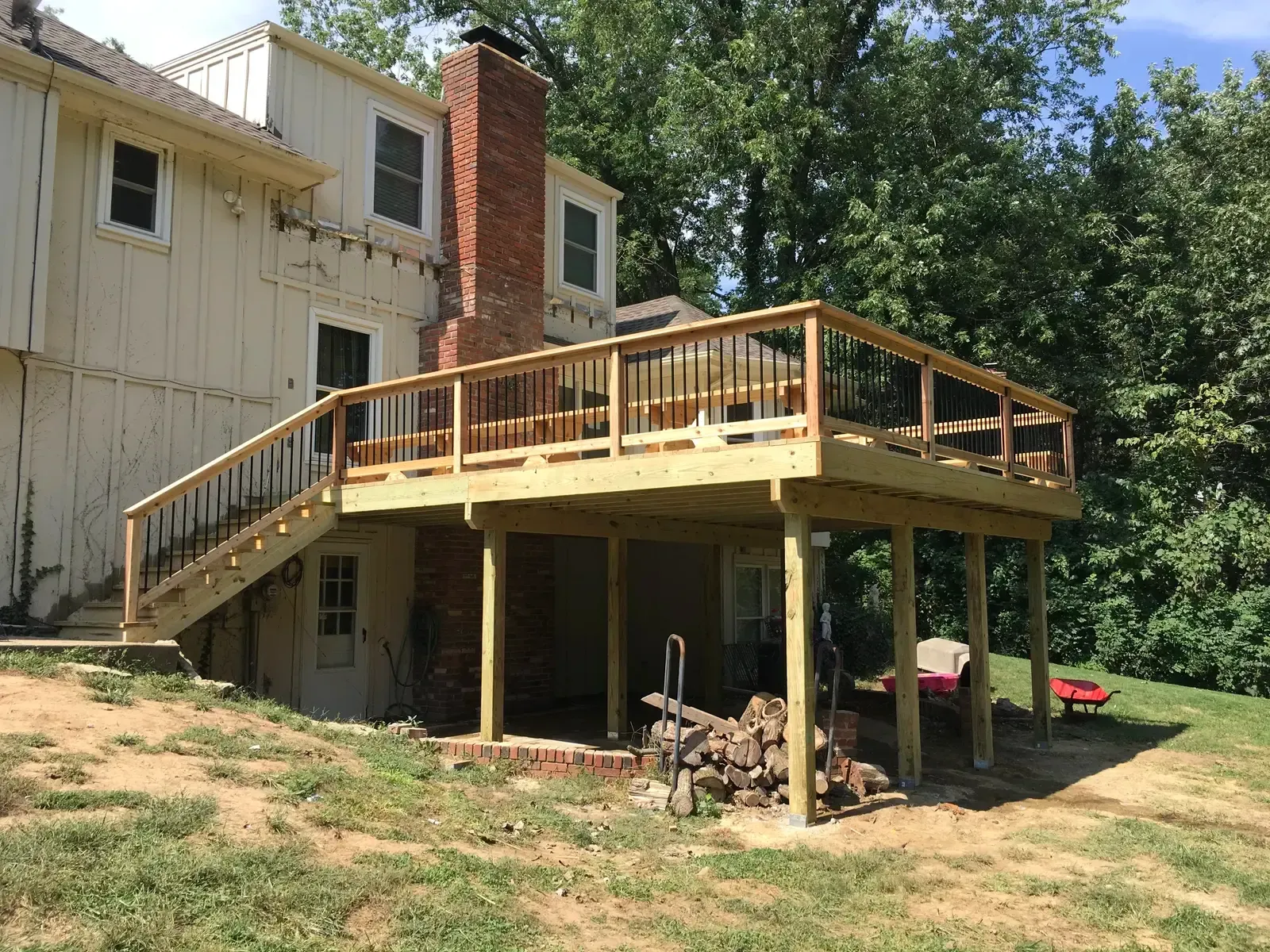
What Should Be Included in a Deck Proposal
A legitimate deck proposal should clearly itemize the scope of work, not just a total number. Here's what to look for in any quote, including ours:
- Footings and framing, sized and spaced for your deck's specific elevation and load
- Decking material, brand, and color
- Railings and balusters, with material and height specified
- Stairs, if applicable, including width and railing
- Permit fees or a clear note on whether permits are the homeowner's responsibility
- Removal and disposal of an existing deck, if this is a replacement
- Cleanup and site restoration
- Warranty terms, both for workmanship and any manufacturer product warranty
Questions to Ask When Comparing Deck Quotes
If you're getting more than one estimate, a few direct questions can help you compare quotes on equal footing rather than just by the bottom-line number.
- Does this quote include permit fees, or are those separate?
- Does it include removal and disposal of my existing deck, if applicable?
- What's the warranty on labor versus the material itself?
- Are the crews full-time employees or subcontractors?
- What's specifically included in "cleanup" — will all debris and old materials be hauled away?
- Is the footing depth and post spacing specified, or just implied?
A quote that's noticeably lower than others is sometimes missing one of these items rather than reflecting a better price for the same scope of work.
Permit Fees
Many Kansas City-area municipalities require a permit for new deck construction, particularly for raised or elevated structures, and permit fees vary by city and project size. Permit cost is a real part of total project budget that's easy to overlook when comparing quotes. We can tell you what applies to your specific property and municipality during your estimate.
Why We Don't List Flat Deck Prices Online
By now it's clear that deck cost depends on a long list of property-specific details — material, size, elevation, footing conditions, and additional features. Because those factors vary so much from one property to the next, an online price list or calculator can only ever give you a rough guess, and a rough guess isn't much help when you're planning a real project and a real budget.
Instead of publishing a generic number that may not reflect your property, we'd rather walk your yard, understand what you're trying to accomplish, and give you a proposal built around your actual project. It takes the same amount of time as reading a price chart, and the number you get back is one you can actually rely on.
Frequently Asked Questions About Deck Cost
What is the average cost of a deck in Kansas City?
There isn't a reliable single average, because material, size, elevation, footing conditions, and additional features all affect the total cost, and those vary significantly from property to property. Rather than quote a number that may not apply to your property, we provide a free on-site estimate so you get a figure based on your actual project.
Is composite or wood decking more expensive?
Composite decking typically costs more upfront than wood, but requires less ongoing maintenance. Wood costs less initially but needs periodic staining and sealing to maintain its appearance and lifespan.
Does a raised deck cost more than a ground-level deck?
Yes, generally. Raised decks require taller support posts, deeper footings, and additional bracing that a ground-level design doesn't need.
Do stairs and railings cost extra?
Yes, in most cases. Stairs and railings are priced separately from the core deck surface based on linear footage, material, and design complexity.
Does removing my old deck cost extra?
Yes, in most cases. Removal and disposal of an existing deck is typically priced as part of the replacement project scope and depends on the condition and construction of the old deck.
How can I get an accurate price for my specific project?
The most reliable way to get an accurate number is a free, on-site estimate, since so many cost factors are specific to your property's size, elevation, and site conditions.
Get an Accurate Deck Estimate for Your Property
Every property is different, and the fastest way to know what your deck project will actually cost is a free on-site estimate from our team.